How to Choose What to Watch When Everything Looks Good

Learning how to choose what to watch when everything looks good can save your evening from endless scrolling. The trick is not finding the “perfect” movie or show—it is narrowing the options according to your mood, time, company, and energy level.
Why Choosing What to Watch Feels So Difficult
Streaming platforms offer more choices than ever, but abundance can create decision fatigue. Every homepage is filled with trending movies, new TV shows, personalized recommendations, award winners, and titles that seem impossible to ignore.
Recommendation systems also use signals such as your viewing history, ratings, genres, actors, release years, and recent activity to personalize what appears on screen.[1] That can be helpful, but it does not always answer the most important question: What do you actually feel like watching tonight?
Instead of judging every option, create a simple filter. A good choice is usually the title that best matches your current situation—not necessarily the one with the highest rating.
Start With Your Mood, Not the Streaming Menu
Your mood is often the fastest way to eliminate unsuitable choices. Before opening Netflix, Hulu, Disney+, Max, or another streaming service, finish this sentence:
“Tonight, I want to feel…”
- Relaxed and comfortable
- Entertained without thinking too hard
- Excited or surprised
- Emotionally moved
- Inspired or challenged
- Comforted by something familiar
If you want a low-effort evening, choose a sitcom, light comedy, familiar romance, or short documentary. If you want an immersive experience, consider a mystery series, science-fiction movie, historical drama, or thriller.
There is no need to force yourself into a serious film when your brain wants something easy. The best movie recommendation is the one that suits your mental energy.
Use the Five-Minute Watch Decision
Set a short browsing limit—five minutes is enough. Endless scrolling makes every option feel less appealing, while a time limit encourages a decision.
- Choose one streaming service.
- Select a mood or genre.
- Limit yourself to three possible titles.
- Read only the short descriptions and content information.
- Pick one and start watching.
If you are still undecided after five minutes, choose the title with the shortest runtime or the strongest first instinct. You can always stop watching if it does not work for you.
Match the Watch to Your Available Time
Time is one of the most practical filters when deciding what to watch. A two-hour movie may be a poor choice if you have an early morning, while a long TV series may not suit a quick lunch break.
| Available time | Good options |
|---|---|
| Under 30 minutes | Sitcom episode, animated short, comedy special, or short documentary |
| 30–60 minutes | One drama episode, reality show, travel program, or crime documentary |
| 90–120 minutes | Feature film, stand-up special, or documentary |
| Several hours | Limited series, movie marathon, or multiple episodes of a TV show |
Checking the runtime before committing prevents the common frustration of starting something you cannot finish.
Choose for the People Watching With You
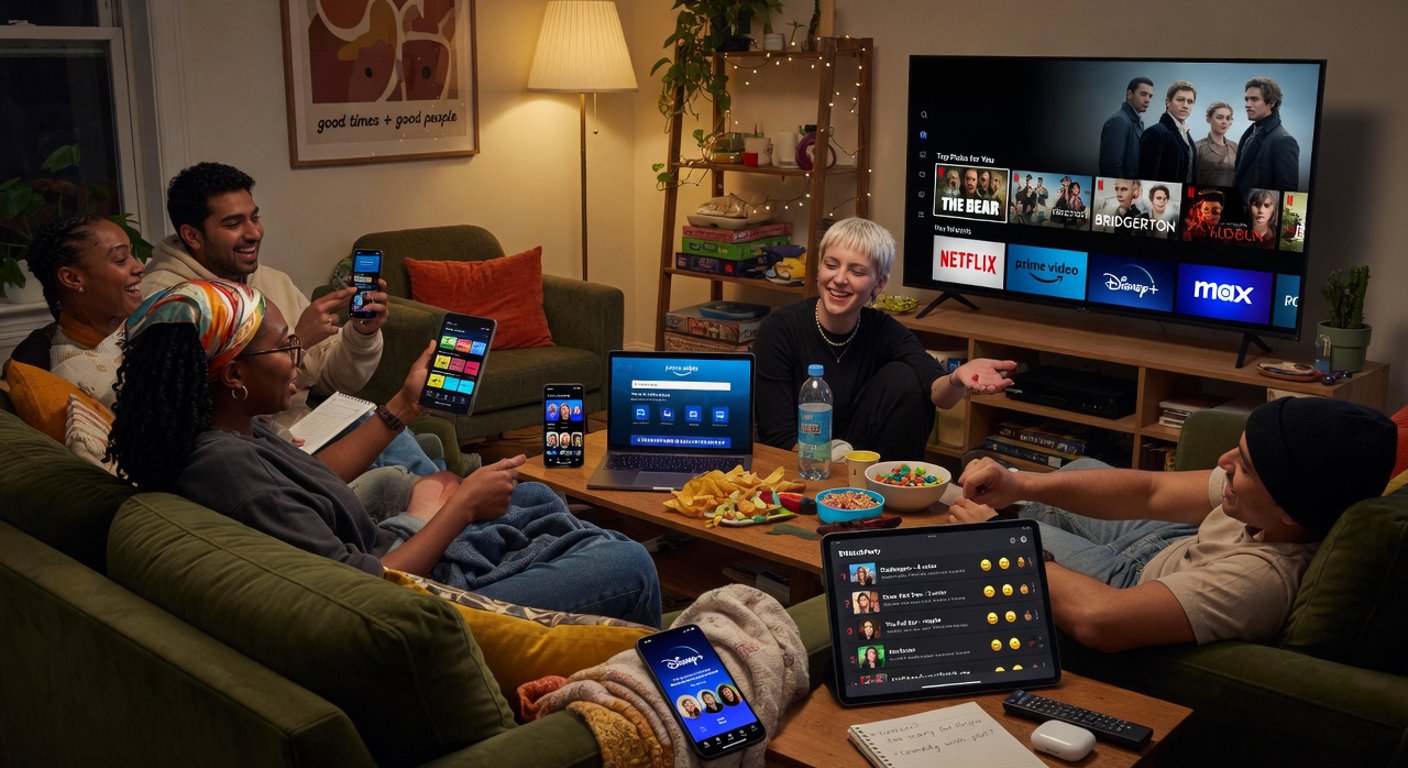
Solo viewing gives you complete freedom, but group movie nights require a slightly different strategy. Ask everyone to name one preference rather than listing every title they might accept.
- One person chooses the genre.
- Another chooses the length.
- Everyone agrees on the content rating.
- The final decision comes from a short list of two or three titles.
For family viewing, check age ratings and content warnings before pressing play. Ratings can help parents judge whether a movie or show is appropriate for children.[2] Consider language, violence, frightening scenes, sexual content, and mature themes—not just the rating label.
Stop Relying Only on Trending Titles
Popular does not always mean suitable for your evening. A trending series may be excellent but still feel too intense, too long, or too similar to what you watched yesterday.
Balance algorithmic recommendations with trusted human suggestions. A friend who understands your taste can often make a more useful recommendation than a homepage ranking. Keep a small watchlist organized by mood instead of one enormous list that creates even more pressure.
Create Simple Watchlist Categories
- Easy comfort: familiar comedies and favorite rewatch movies
- Focused viewing: acclaimed dramas, mysteries, and thought-provoking documentaries
- Group night: accessible comedies, adventure films, and crowd-pleasing movies
- Short commitment: limited series and single-episode shows
- Something different: international films, animation, independent cinema, or unfamiliar genres
Know When to Rewatch Instead
Rewatching is not a failure to find something new. Familiar movies and TV shows can be relaxing because you already know the tone, characters, and emotional payoff. They are especially useful when you are tired, distracted, or watching while doing another task.
Choose a rewatch when you want comfort. Choose something new when you have the attention and curiosity to explore. Both are valid ways to enjoy screen time.
Give New Shows a Fair but Limited Chance
Not every recommendation needs a full-season commitment. Watch the first episode—or the first 20 to 30 minutes of a movie—and ask:
- Do I care what happens next?
- Do I enjoy the characters or storytelling style?
- Does the pacing suit my mood?
- Would I rather be watching something else?
If the answer to the final question is yes, stop. Your viewing time is valuable, and abandoning an unsuitable title makes room for something better.
The Best Rule for Choosing What to Watch
When everything looks good, do not search for the universally best option. Search for the best fit for this moment.
Check your mood, available time, viewing company, energy level, and content preferences. Narrow the list quickly, trust your first reasonable choice, and start watching before decision fatigue takes over.
Afterward, save a brief note about what you enjoyed. Over time, those small observations will make your personalized recommendations more accurate—and choosing what to watch will become much easier.
You May Also Like
 Entertainment
Are Streaming Bundles Actually Convenient?
 Entertainment
The Art of Building a Shared Watchlist
 Entertainment
How to Host a Movie Marathon With a Theme